
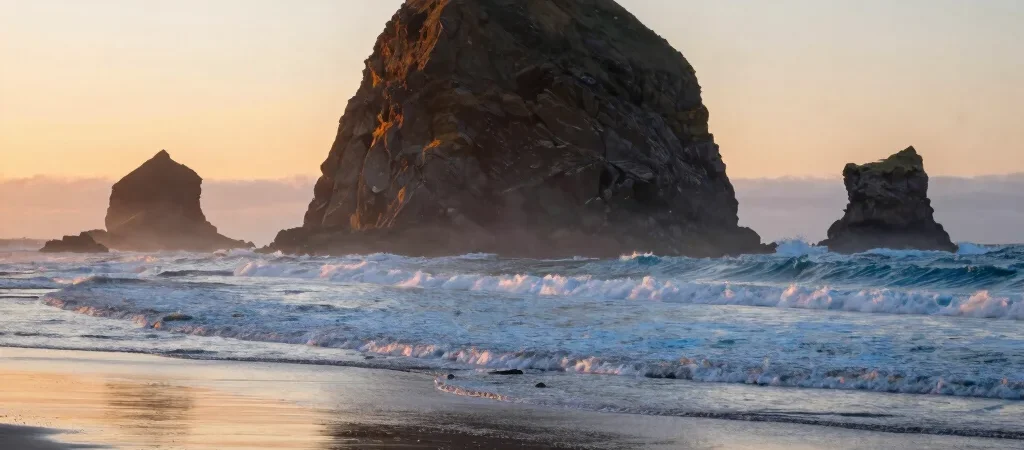
Walking the western coastline of the Olympic Peninsula demands a constant awareness of seawater movement. Unlike inland alpine trails where elevation gains dictate your pace, coastal routes require careful synchronization with daily tide tables. Stepping over slippery kelp beds at dawn rewards photographers with mirror-like wet sand surfaces and undisturbed sea stack reflections.
Reading Tides and Headland Passes
Headland routes along the coast can quickly become impassable when high tides rush against vertical sea cliffs. Hikers must carry updated printed tide charts and plan headland crossings during low tide windows. Always leave an extra hour of cushion before water reaches the steep rocky bluffs.
Framing Golden Hour Light Across Sea Stacks
When golden hour light hits wet sea stacks, contrast can easily overpower digital camera sensors. Position your tripod low near the water edge to capture dynamic reflections in receding waves. Using a neutral density filter lets you smooth out chaotic ocean churn while keeping cliff textures crisp.
Field-Tested Gear for Damp Coastal Climates
Salt spray and thick marine fog pose a continuous challenge to electronic equipment. Pack lens wipes in sealed pouches and store spare batteries inside warm inner jacket pockets. Synthetic dry bags keep camera bodies safe during rain-slicked beach scrambles.